Barcelona
The Shadow of the WindBarcelona is more than the setting of Daniel Sempere’s story: its streets and buildings preserve histories that families and the city itself have tried to silence. From the bookshop above Calle Santa Ana to the ruined and repurposed sites associated with Julián Carax, urban space connects Daniel’s present to the losses of the past. Streets, weather, public transport, and changing buildings make the city a living archive—one in which memory can be encountered, concealed, or transformed.
Setting and urban routes
In early summer 1945, Daniel and his father walk through a Barcelona under ashen skies toward the Cemetery of Forgotten Books. Their route leads along the Ramblas, through the arch at Calle Arco del Teatro, and into the Raval, where dawn barely reaches the narrow lane. The destination’s time-darkened wooden door makes the city’s ordinary streets give way to a hidden world of books and memory. The journey establishes Barcelona as a place where a familiar urban map can conceal histories that are not visible at street level.
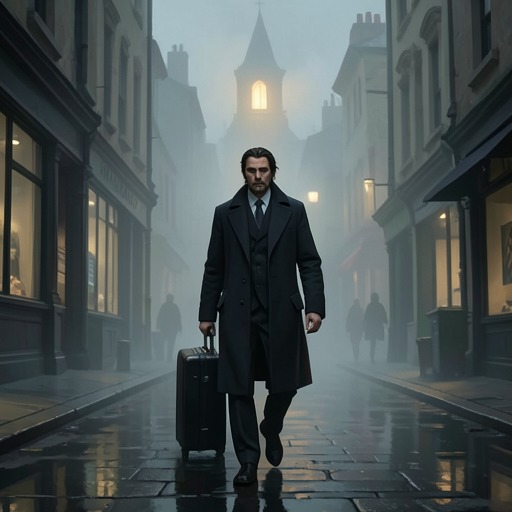
The city is also encountered through everyday routes and changing light. In October, Daniel crosses a busy Barcelona of bootblacks, office workers, lottery vendors, and street sweepers, with the city filling with cars. Later, in another journey toward the mansions of Avenida del Tibidabo, he rides the blue tram uphill through the dawn mist. Decades afterward, a snowfall changes the same tram route into a cold, unfamiliar passage: Daniel travels from the Hospital Clinico station to the deserted avenue and boards the tram again. Repeated streets and transport links give the city a continuity that survives changes in Daniel’s age and circumstances.
Home, books, and private memory
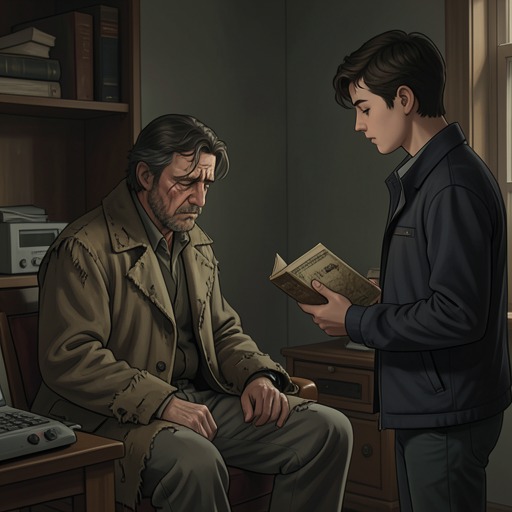
Daniel grows up with his father in a modest apartment on Calle Santa Ana, directly above the family bookshop, a business inherited from his grandfather. The shop specializes in rare collectors’ editions and secondhand books, and his father hopes Daniel will one day take it over. The books are part of Daniel’s childhood world, but the home also carries the absence of his mother, who died of cholera shortly after the Civil War. She was buried in Montjuic on Daniel’s fourth birthday; the remembered rain and his father’s inability to answer his question about heaven become part of the family’s silence.
That silence is shaped by a promise. Before her death, Daniel’s mother asked his father not to speak to him about the war or let him remember what had happened. Barcelona’s past is therefore not simply public history: it enters the home as an inherited prohibition, and the city’s places become routes by which Daniel approaches what his family has kept from him. The bookshop offers a countervailing practice. Books preserve stories and give Daniel a life among words, even as the family’s own story remains incomplete.
A city marked by war and repression
The wider city bears the pressure of political violence and deprivation. In the years before the Civil War, Julián Carax’s mother urges him to associate with Jorge Aldaya, whose family has money and social standing, rather than with poorer young men such as Julián and Fernando Ramos. The contrast places class divisions within the city’s social world, where family reputation and wealth shape who is considered a suitable companion.
As the Civil War approaches, Julián crosses the French border shortly before it begins. His novel, The Shadow of the Wind, has appeared in a single edition only two weeks earlier, while his friend Miquel Moliner, weakened by illness and threatened as a journalist, struggles to keep working. The approaching conflict is already felt in Barcelona as fear; in retrospect, its last days become the prelude to an inferno of combat, hunger, and violence. The city’s later silences are not a sign that the events did not occur. They reflect how war makes people doubt their own memories and leaves fewer voices able to tell what happened.
Political danger also shapes Daniel’s own movements. During a storm, a power failure darkens the city while he is trying to absorb threatening information; the streets become a place of fear rather than a neutral path home. Years later, Fermin’s apparent danger draws anxious attention as Daniel and his companions move through the city. When police watch the stairs and Plaza Santa Ana, Daniel’s father keeps the bookshop open as usual, making the familiar shopfront a quiet declaration that Fermin is innocent.
Hidden histories and returning places
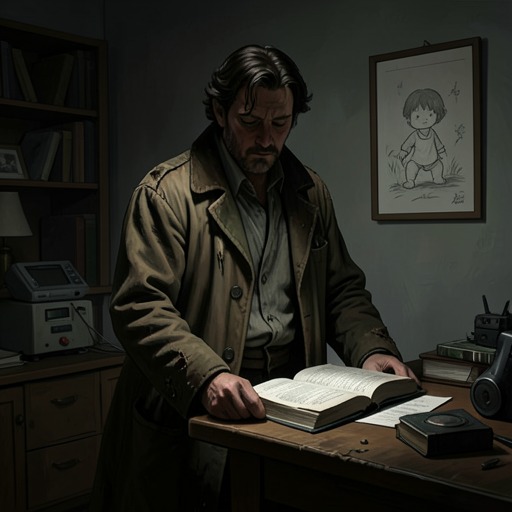
Barcelona’s old buildings reveal the gap between what is visible and what has been concealed. In the abandoned apartment Daniel enters, a heavy door opens onto a dark, damp interior, with dust, broken tiles, and footprints suggesting someone has been there. Elsewhere, at the Aldaya mansion, Daniel discovers a crypt containing two white coffins, one scarcely two feet long. The small coffin discloses the human consequences hidden beneath the mansion’s imposing appearance and connects its rooms to the buried history of Julián and Penelope Aldaya.
When Julián finally confronts the tombs, the discovery changes the meaning of his return to Barcelona. He is left trembling and speechless; Nuria holds him and believes that facing the truth may free him from what has kept him in the city. The paired graves make the past physically present, but they do not restore what has been lost. Their force lies in ending Julián’s uncertainty and allowing him to imagine leaving Barcelona at last.
The city’s spaces continue to change after the events they witnessed. The Pueblo Nuevo warehouse burns, leaving only its brick-and-metal skeleton. The Aldaya mansion, against expectations, survives and is restored; its garden becomes a car park, its old library a boardroom, and the room where Daniel and Bea conceived their son a bathroom. These conversions do not erase the earlier events, but they make the uneven survival of memory visible: a building can remain while its meaning is overwritten by new uses.
Barcelona as a memory-bearing city
The novel repeatedly returns to the tension between visible place and hidden history. Barcelona’s routes bring Daniel toward what has been withheld; its houses preserve evidence that family and political silences cannot wholly suppress. The Cemetery of Forgotten Books gathers neglected written memory, while the shop on Calle Santa Ana joins that inheritance to Daniel’s ordinary family life. The city’s streets and buildings thus bind the stories of different generations without making their experiences identical.
In the final picture of the bookshop, Daniel writes at the counter while his son Julián watches, and Bea and Daniel run the business together. Daniel’s father remains upstairs, still living with memories and sadness that Daniel cannot fully resolve. The shop continues across generations, not as proof that the past has been settled, but as a place where books, family, and remembered lives remain in circulation. Barcelona endures in the same way: its landmarks survive, yet each return reveals a changed surface and another layer of history beneath it.